A new 1RM Back Squat. A heavy Deadlift. Bench Press and Strict Ring Dips. The full Clean & Jerk and the Power Snatch. A fast 1000m Run and the Echo Bike as our machine. That is what we are building now.
Block 3: July 6 – August 16 · Block 4: August 17 – September 27 · Test Week: September 28 – October 4
Block 3 is a Building Block. In simple terms: this is where we raise the ceiling on individual capacities, with clear progressions and less interference between sessions. Block 4 is the CF Specific Block that follows, where we learn to use everything we build here. Both blocks point toward Test Week 2 (September 28 – October 4).
Going into Block 3+4 we start by looking at what we want to improve. You will notice that the focus is different from the first pair: this time it is the Back Squat instead of the Front Squat, a heavy 1RM Deadlift instead of max reps at sub-maximal weights, Bench Press and Ring Dips for the upper body instead of the Strict Press, the full Clean & Jerk and the Power Snatch on the barbell, gymnastic movements in combination with others, and the Echo Bike as the main machine.
These are the different tests we will do in the Test Week, and because of this also our goals for the block:
In addition to these tests, you should choose one to three movements or a capacity that you personally need to improve on. Send us a message on what this is and we are ready to help make a plan.
If you want to see how Block 3+4 fits into the bigger picture – the four block pairs, the Test Weeks and your Athlete Profile – you find all of it in The Training Year further down the page.
When we set up the training week, our main goal is to get as much training quality out of each week as possible. Especially in the Building Block where we use a lot of linear progressions this is important since we want to make sure that you get into each of these sessions with about the same readiness. This way the progressions actually work and you are able to improve from week to week.
The VO2 Shock Block is back again this block. During the year we do a total of four VO2 Blocks. A VO2 Block is a period of three days where we do more high intensity training than usual. For Block 3 this will be at the end of Week 6 where we have 5 high intensity sessions where the goal is to collect high heart rate (88–95% of max). The thinking behind this is much like the approach we have to the training blocks in general: give enough stimuli in a short period to actually create change.
The research supports this. Rønnestad et al. (2012) compared two groups of trained cyclists over 4 weeks. Both groups did the same total volume and intensity of high intensity training. The only difference was how the sessions were organized. One group concentrated 5 HIT sessions into a single week and then did 1 session per week for the remaining 3 weeks. The other group spread it out with 2 sessions per week for all 4 weeks. The result: the group that concentrated their high intensity work improved VO2max by 4.6% and power output at lactate threshold by 10%. The group that spread it out saw no significant improvement at all.
Rønnestad et al. (2012), Scand J Med Sci Sports. Trained cyclists, 4-week intervention.
This is why we build in these concentrated blocks instead of just adding one extra interval session per week. The same amount of work, organized differently, gives a much bigger response. In order to get the most out of the VO2 Blocks (and your training in general) we keep clear deloads. Block 3 has a deload in Week 5 before the VO2 Shock Week, and Block 4 has a deload before Test Week 2.
Below you can see how the structure of the training weeks will look in the Building Block. We use a combination of weekly and bi-weekly progressions. By having some progressions only occur every other week we achieve a few things:
1, We are able to get in more variation. Even though we are more specific in our approach there is still a lot of training to get in, and having two weeks to use instead of one helps us here.
2, Some progressions can be really hard to do every week. By only having to improve every other week it helps motivation stay high and also gives enough time between sessions to actually improve.
Note: our most important progressions still happen every week.
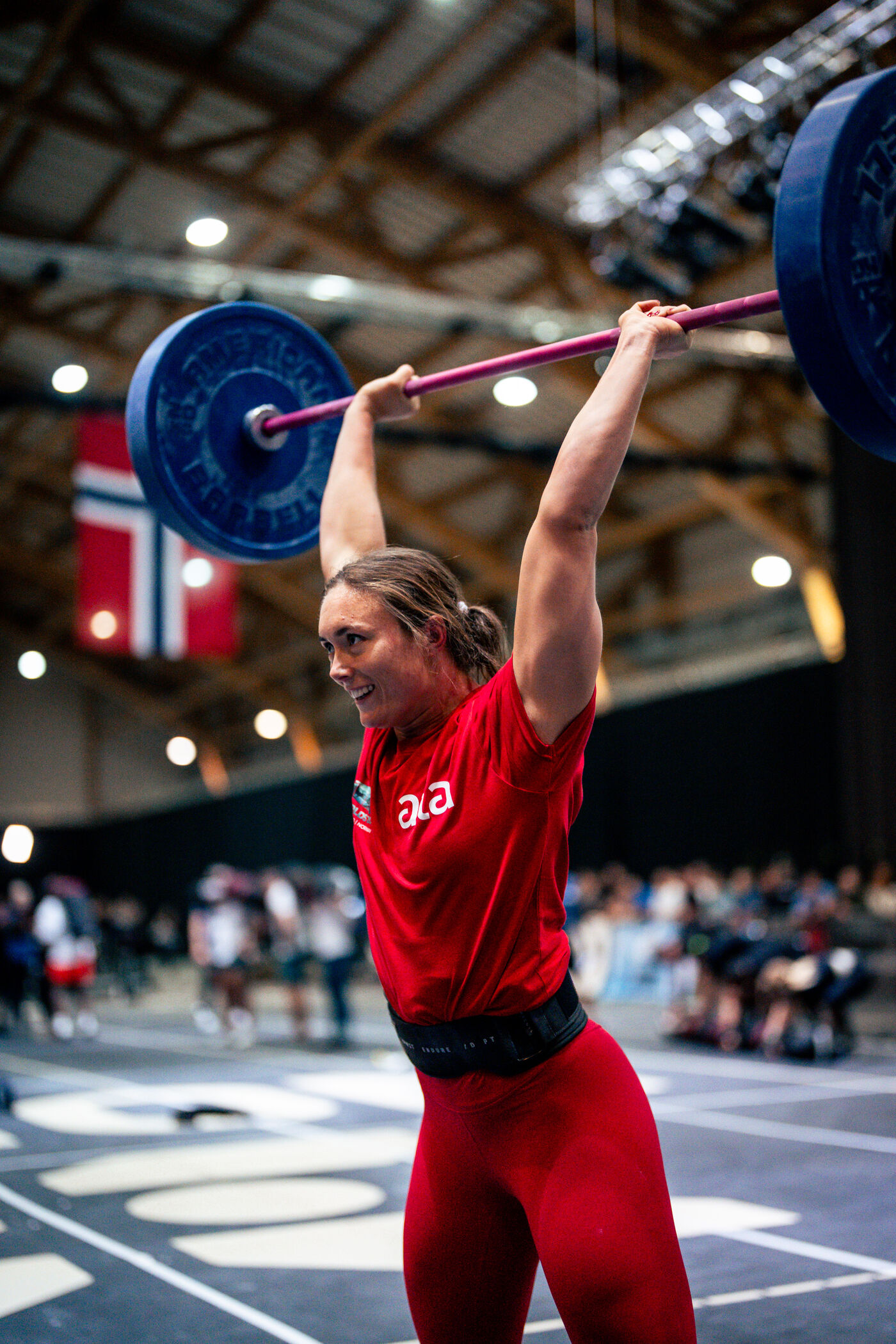
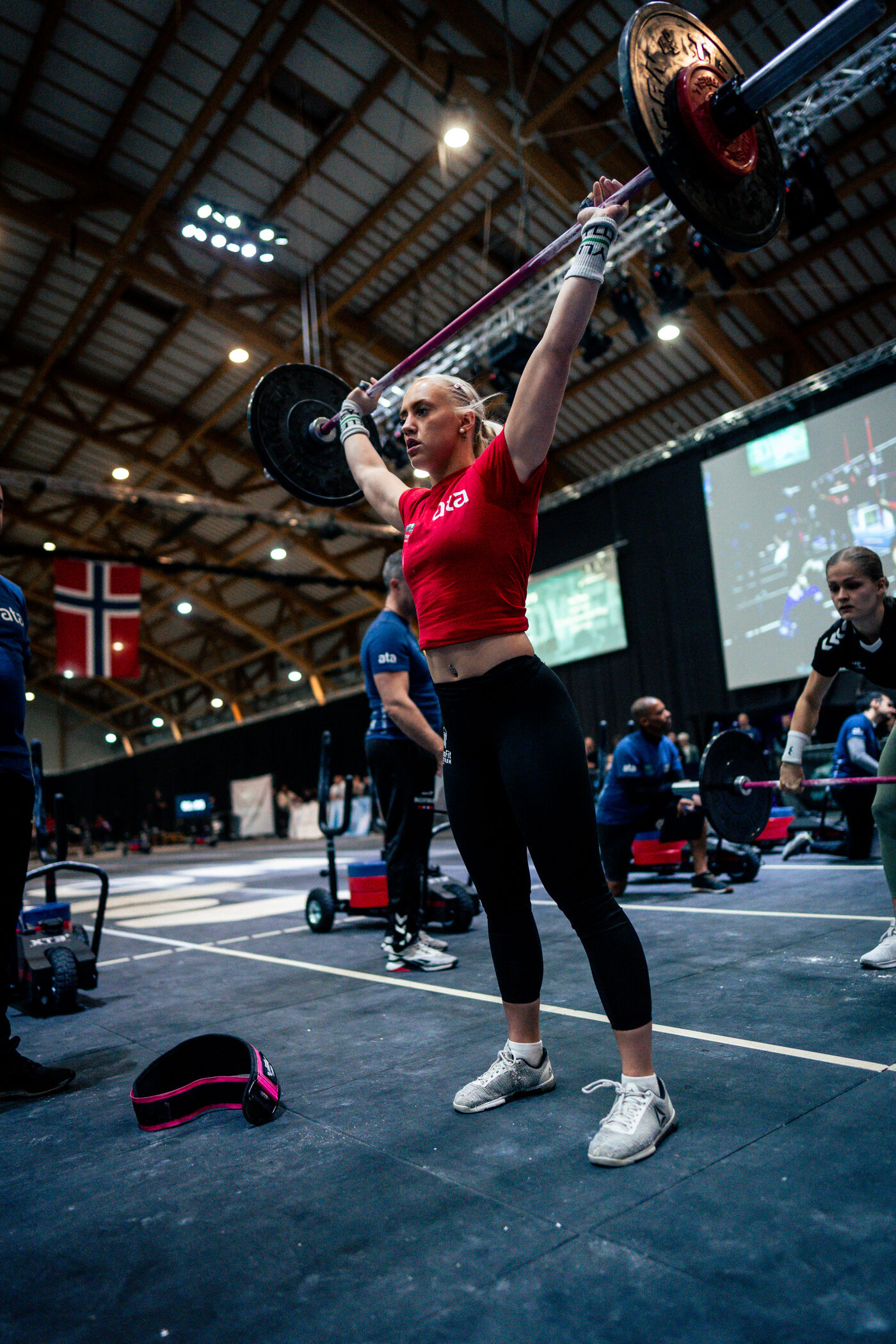
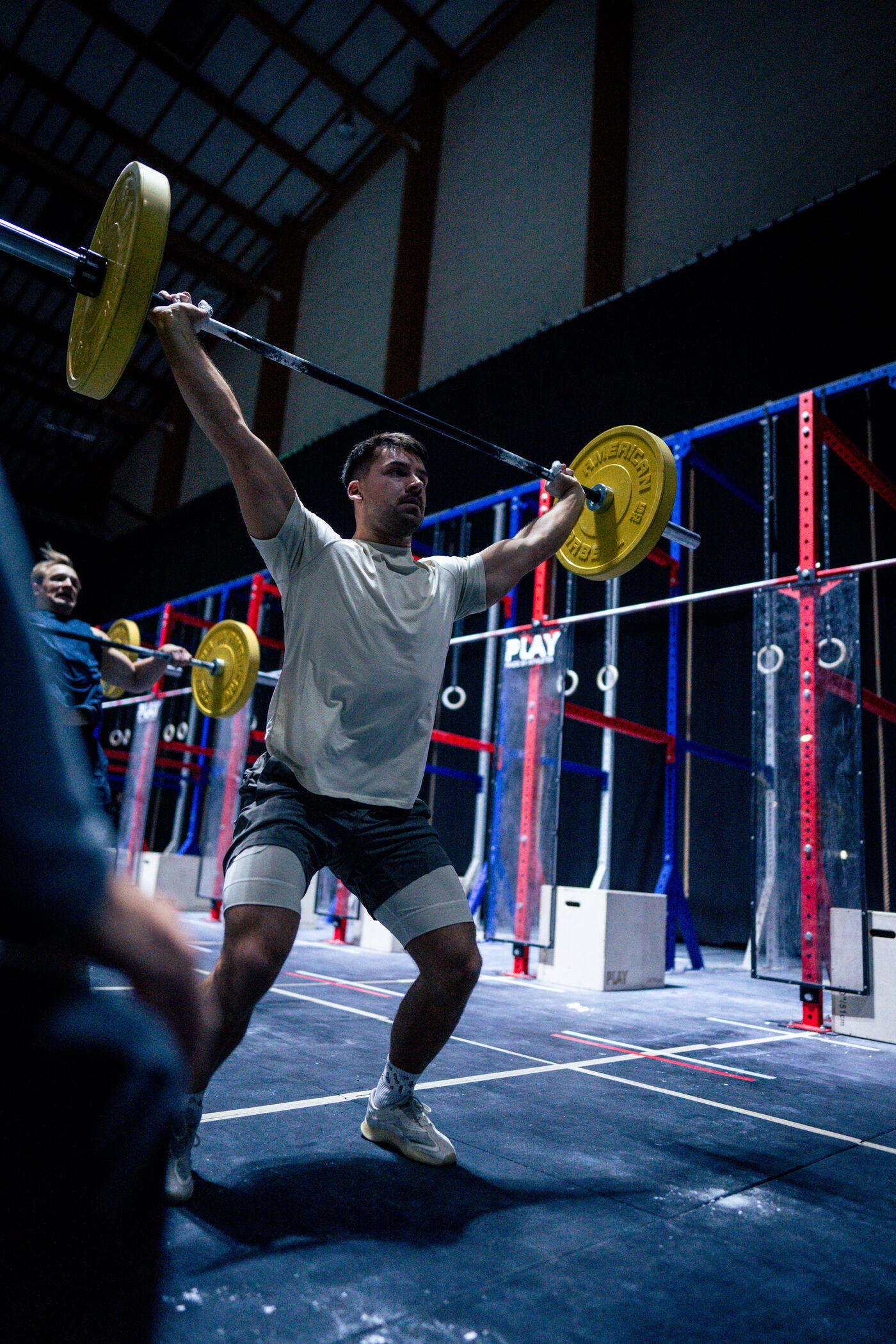
In a Building Block there is a lot of focus on strength. There are very few competition workouts where we do not lift a weight. And as long as the weight you are working with is above 40% of your 1RM, it is not really conditioning, it is strength. Above 40%, for most people in most workouts, it mostly comes down to how strong you are. Our first focus is always to get the common competition weights below 40%: the 43/30 kg barbells, the 61/43 kg barbells, and the 22.5/15 kg dumbbells.
Strength is also the foundation for gymnastics. We have tested more than a thousand athletes through our Athlete Profile and the data is very clear: the stronger you are in the pull, the more reps you do in every hanging movement. All the way up to 61%+ of bodyweight in the Weighted Pull Up, athletes keep getting more Toes to Bar, Ring Muscle Ups, and Rope Climbs. For the press, the same pattern holds up to 111%+ bodyweight in the Strict Press.
| Weighted Pull Up | TTB | CTB | RMU | BMU | LLRC (2 min) | RC (2 min) |
|---|---|---|---|---|---|---|
| 0% of BW | 4.8 | 0.8 | 0 | 0 | 0 | 1.5 |
| 1-10% of BW | 11.2 | 4.6 | 0 | 0.5 | 0 | 4.5 |
| 11-20% of BW | 22.2 | 12.9 | 1.2 | 4.8 | 1.4 | 5.6 |
| 21-30% of BW | 31.2 | 23.6 | 4.1 | 13.2 | 3.4 | 7.4 |
| 31-40% of BW | 36.4 | 32.3 | 9.6 | 18.1 | 4.8 | 8.6 |
| 41-50% of BW | 38.2 | 33.6 | 11.5 | 20.6 | 6.1 | 10.2 |
| 51-60% of BW | 41.4 | 38.3 | 16.4 | 23.5 | 5.7 | 8.9 |
| 61%+ of BW | 43.2 | 47 | 19.2 | 25 | 6.5 | 8.5 |
| Strict Press | Strict HSPU | RMU |
|---|---|---|
| -50% of BW | 0 | 0 |
| 51-60% of BW | 4.2 | 0.3 |
| 61-70% of BW | 7.4 | 1.2 |
| 71-80% of BW | 15 | 5.3 |
| 81-90% of BW | 21.3 | 9 |
| 91-100% of BW | 28.6 | 14 |
| 101-110% of BW | 31.1 | 16.6 |
| 111%+ of BW | 35.5 | 22.3 |
This block the squat focus shifts from the Front Squat to the Back Squat. Our goal is a new 1RM Back Squat plus a strong Max Rep set at 75%, so you will see a Back Squat strength cycle where we build the load week by week. After a block of high-rep Front Squat work without sleeves, the Back Squat lets us load the legs and posterior chain heavier, and your sleeves and belt are back for the heavy work. Because the Back Squat is our main squat goal it goes on Mondays when you are the most fresh.
During the week we keep single-leg work and Front Squat variations like the Bottom-Up Front Squat and the Paused Front Squat as accessories. These support both the heavy Back Squat and the Clean & Jerk, and let us target any weaknesses we have in the front squat position – all without losing what we built in the last block, just with less volume. For variation we rotate Tempo Back Squat and Speed Back Squat to build both good positions and explosiveness.
The Deadlift goes from a high-rep test last block to a heavy 1RM Deadlift this block, so the load on the bar gets heavier now. We attack the pull from the floor through:
1, Heavy Deadlift where we build toward a new 1RM with a perfectly arched back.
2, OLY Pulls and lighter accessory work where we practice the same arched position under control.
By attacking our pull strength the goal is to get stronger in everything we pull from the floor. Often we see that one might be really strong in for example the Deadlift where the back can be rounded but lack the strength when we need a perfectly arched back in the Power version of the OLY lifts. By building both the heavy Deadlift and the OLY pulls the goal is to improve both.
For the upper body the test movements this block are the Bench Press and Max Strict Ring Dips, so our pressing focus moves toward horizontal and dip strength. The Bench Press gets dedicated progressions where we build the load over the block, and we pair it with Strict Ring Dips that we train both for max strength and for rep endurance. This pressing strength carries directly into the Ring Muscle Ups and Handstand Push Ups in Quarterfinals 24.3, which is why we lean into it now.
We of course keep our Strict Press and Pull Up ticking over so we do not lose them, but these now move down to maintenance.
Upper Body Strength is very important if you want to be good in CrossFit so make sure you prioritize these sessions.
We could keep this in for every block because it is always relevant. Usually CrossFitters are really good at putting in the work. But one area where we have often seen that it is possible to improve is when we do accessory work. In order to get the effect needed here we want to follow the set RIR (reps in reserve) so that each set is actually hard enough to create a change. Do not just go through the motions on the accessory work – it is often exactly what moves the limiter you are trying to fix.
Olympic Lifting in CrossFit is different from Olympic Lifting in weightlifting. In weightlifting, the goal is to lift as heavy as possible in one clean attempt. In CrossFit, we get challenged in many more ways than just a 1RM. We mainly need to get good at light, medium, and heavy barbell cycling for workouts. A high 1RM absolutely helps for this, but it is not the only thing that helps us. This is exactly why, alongside a 1RM Power Snatch, we also test our capacity at medium and medium-heavy loads in the Semifinals 21.4 workout.
With our new training structure it is easier for us to work more specifically with the different things we need to be good at. This block the focus flips from last time. For the Snatch our goal is the 1RM Power Snatch, and for the Clean & Jerk we go after the full 1RM Clean & Jerk where we catch the clean in the squat.
Last block we built the bottom and overhead position through the Hang Squat Snatch. Now we use that position and chase speed and power off the floor with the Power Snatch. The Power Snatch forces you to be aggressive and fast on the pull and to receive the bar high, which builds the explosiveness that carries into every Snatch you do in workouts. You will see Power Snatch complexes and position work early in the block, then heavier Power Snatch singles as we get closer to the test. A good overhead position is still the foundation, so we keep training it in warm ups and accessory work.
Last block we focused on the Power Clean & Jerk. Now we go after the full 1RM Clean & Jerk where we catch the clean in a full squat. This lets us express the leg strength we are building in the Back Squat directly on the barbell, and it is usually where athletes can add the most kilos to their number. A big thing will again be the overhead position and a confident Jerk, since the Jerk is what most often caps the lift. You will see Clean & Jerk complexes and battery work through the block, building toward heavier full lifts as the test gets closer.
The training for our Olympic Lifts will start with relatively light weights, and since we have two blocks to build up you should take your time in the beginning. Instead of chasing a heavier weight all the time, there are other ways to improve from the last set: 1, Better positions. 2, Faster speed on the bar. By holding back on the weights in the start of the block you also get more energy for your strength training, which in turn will give you better results in the Power Snatch and Clean & Jerk.
In addition to the training for the lifts themselves we will focus a lot on your overhead mobility and stability. You will see this in the warm ups, accessory work, and the Mobility Program.
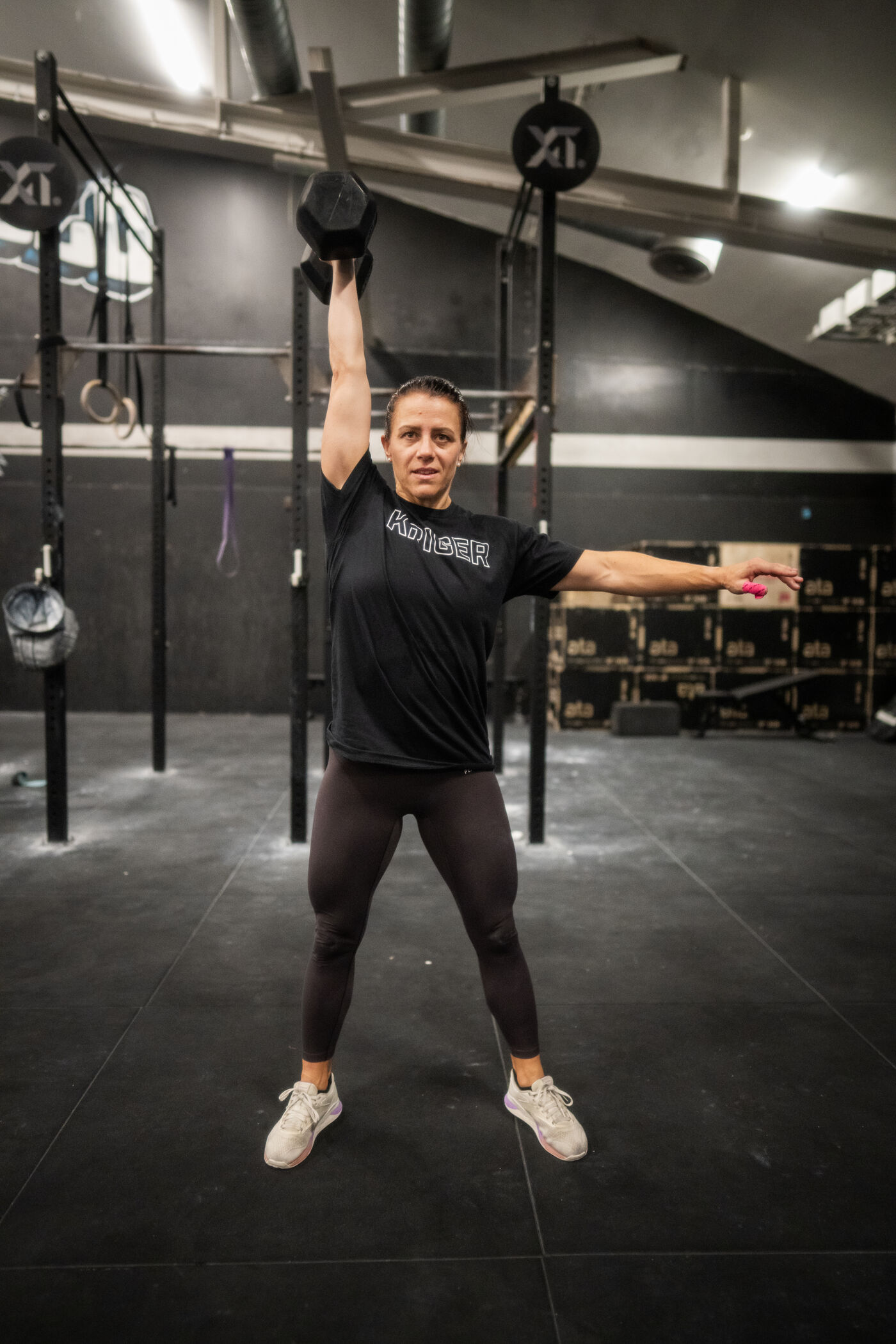
As we move from the CF Specific Block into a Building Block, the intensity of the conditioning sessions comes down a little on purpose, so you have more energy for the strength and skill work we prioritize this block. That makes it even more important to follow the prescribed intensity on the endurance training. We cannot stress this enough. If you are in doubt whether you should push harder or not, hold back. And with the inclusion of the targeted VO2 Blocks in Week 6 this is even more important. We need to have enough punch when we get into this week to get all the benefits from it.
For our endurance training the goal in Block 3+4 shifts to two things: a fast 1000m Run, and the Echo Bike, where we test both a 10 second Max Watt effort and a 30 minute 30 seconds on / 30 seconds off piece. So compared to last block the running gets shorter and faster, and the Echo Bike replaces the Rower as our main machine focus.
We put a lot of work into our aerobic base with the 5k Run in Block 1 and 2, and that foundation is a big advantage now – it is a lot easier to continue sharpening an engine you have already built than to build one from scratch. The 1000m Run is a much shorter and faster test than the 5k, so the running work changes with it. 1, We still collect easy Zone 1-2 volume on Tuesdays to keep the aerobic base. 2, Our quality running session moves toward speed: shorter, faster intervals at and above goal 1000m pace (think 200s, 400s and 600s) where we practice holding a pace that is uncomfortable but repeatable. We keep a little threshold work so the engine stays underneath the speed, but the emphasis is on running fast.
If running is really important for you, you can consider adding more meters during the week by using warm ups, cooldowns and similar for more low intensity meters. Running responds really well to volume which is why this often yields great results.
The Echo Bike is the machine focus this block. For the 10 second Max Watt test we implement short, fully rested all-out sprints to build raw power. We call these Sprint Intervals, and they are also highly effective for improving your VO2max. We also mix the Echo Bike with various movements like DB Snatch to work on your speed and power. For the 30 minute 30/30 we build the ability to repeat hard 30 second efforts without falling apart. This tests your ability to continuously repeat high power outputs, which is an important capacity in CrossFit.
In a Building Block you see fewer CF Specific workouts. We also put the sessions in places where they interfere with the other training as little as possible, especially the ones with high RPE. Because you see these sessions less often it is important that you really focus on them. Use the warm up to practice the most efficient way to move on each movement and decide a focus point for each movement. One of the easiest ways to get better quick is to get better at moving efficiently. Think about where you waste energy: do you jump too high on double unders? Do you muscle the bar on snatches instead of using your hips? These small adjustments compound over time and can make a bigger difference than any extra conditioning session.
After Block 3+4 we will test the Snatch Battery (Semifinal 21.4) and Open 16.5 (Thrusters + Bar Facing Burpees).
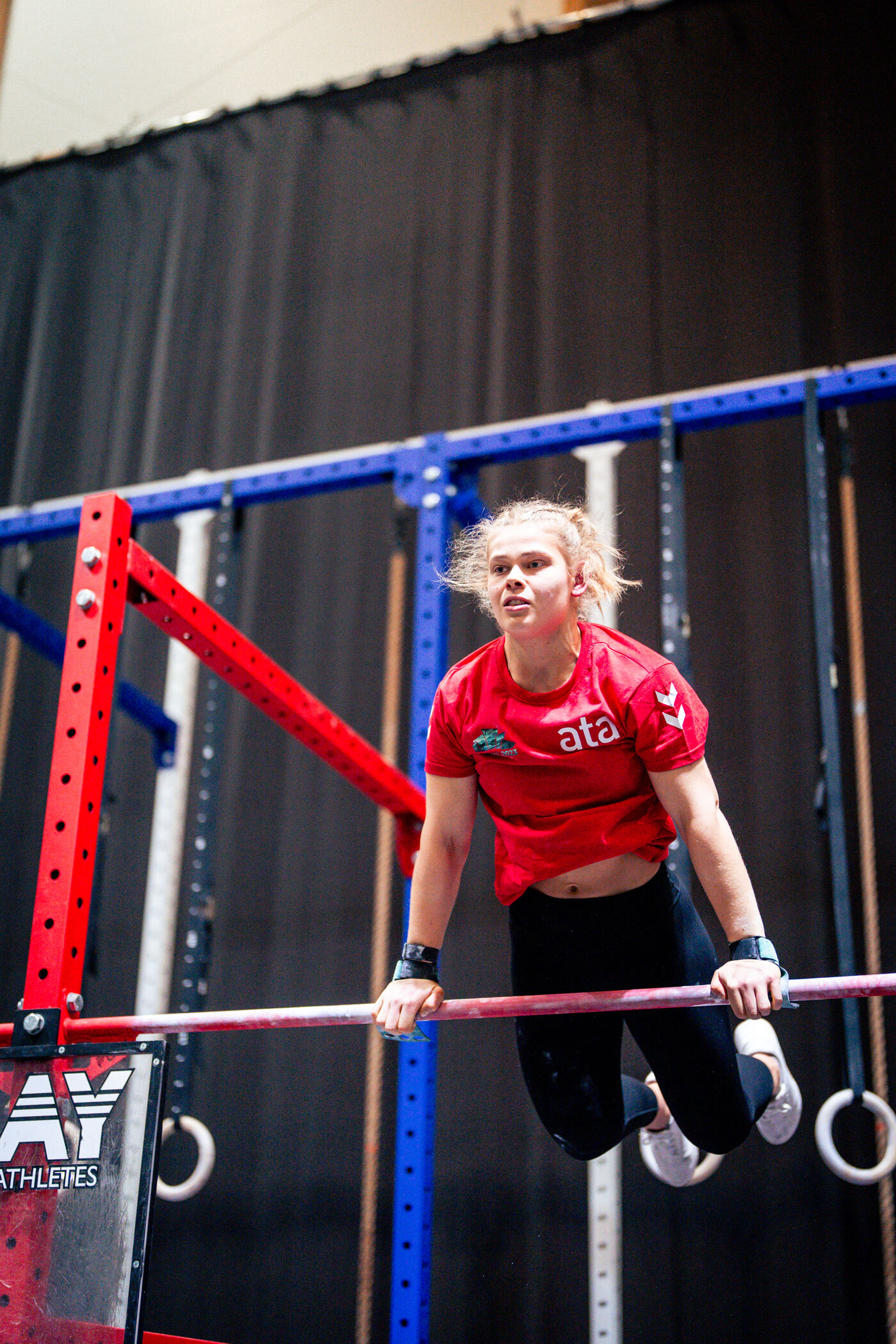
A very big part of getting better at gymnastics is getting strong and balanced in our upper body, which we covered in the Strength chapter. The data from our Athlete Profile makes this very clear: the stronger you are in the pull and the press, the more reps you get in every gymnastic movement. Because of this our gymnastic sessions in the Building Block focus on movement quality. That means fewer fatigue-heavy workouts and more interval-style sessions with early breaks and lower reps. You still accumulate a lot of volume, but with small sets we keep higher movement quality on every rep. If you practice Toes to Bar in sets of 30 where the last 15 reps are ugly, you are practicing bad movement patterns. If you do 6 sets of 5 with perfect form, you are teaching your body the right pattern and it will hold up much better in competition when fatigue is high.
The gymnastics for this block builds really well on Block 1 and 2, where we can use our straight-arm endurance from the Wall Walks in the 2 min HSW test and the strength from the Strict Press for the Handstand Push Ups in Quarterfinals 24.3. The Quarterfinals 24.3 is loaded with Handstand Push Ups in every variation (kipping, strict, and wall facing), Toes to Bar, Rope Climbs, and Ring Muscle Ups. This is a really good test because we can finally mix more movements together and see how we are able to handle it.
We also have a separate 2 min Handstand Walk test. Everything we do in gymnastics this block points toward those movements. We already put a lot of work into the Rope Climbs and Handstand Push Ups in Block 1 and 2, which gives us a real advantage going into this block. Even though HSPU is not a test for this block pair, it is still a big part of the QF 24.3 test, so we keep training the different variations – kipping HSPU, Strict HSPU and Wall Facing Handstand Push Ups – to be ready for it. The main goal is to transfer our pressing strength – the Strict Press we built in Block 1 and 2, and the Bench Press we are building now in Block 3 and 4 – over into CrossFit movements like these.
Handstand Walk Skill Development. With a dedicated 2 minute test this block, Handstand Walking gets extra attention. If you want to put in more work on your Handstand Walk, either during this block or later in the year, our Handstand Walk add-on program is a great place to start.
Ring Muscle Ups. We train the Ring Muscle Ups both as their own progression and in combination with a variety of other movements. This is exactly the kind of training we need for Quarterfinals 24.3, where the Ring Muscle Ups come at the very end and you will already be affected by all the work you did before them. The video below is really good to pick out a focus point for your Ring Muscle Up work:
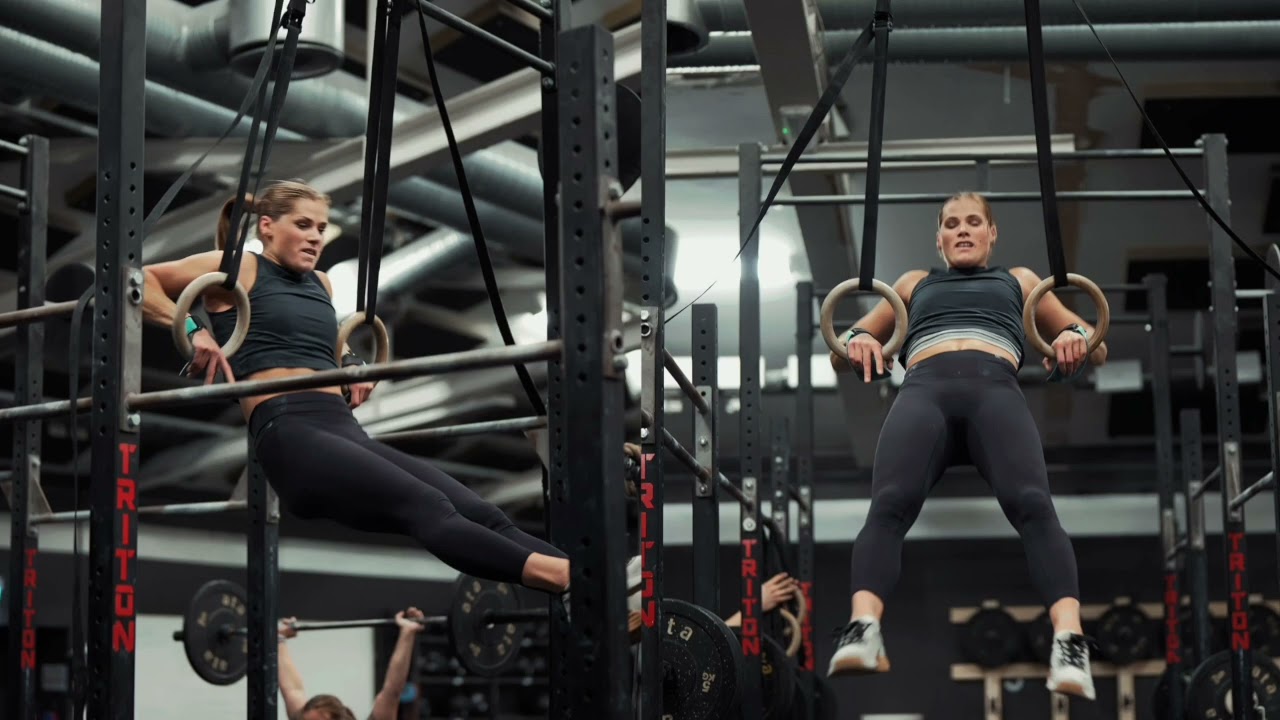
The training we have designed for these blocks is really good, but the truth is that it will only give you results if you are able to recover from it. Time and time again we come back to this when we see athletes all of a sudden getting much better results than previously. It is almost always a product of an increased focus on limiting stressors and improving recovery more than it has been a new form of training.
Here are the biggest things to think about when it comes to recovery:
This is the biggest thing. And before changing anything else in your training, if you want better results, try to consistently go to bed 30 minutes before normal bedtime to see what an increased 30 minutes of sleep can give you. This is the biggest recovery tool and something you should always prioritize over all others.
Your main focus should be to get enough calories in. Your second focus should be nutrition timing, both in terms of setting you up for success for your sessions and primarily what to take in after the session. This is extra important when we do double sessions.
We have built a Nutrition App that takes the guesswork out of this. The app adjusts your macros for every single session based on what is on the program that day, your bodyweight, your goals, and your daily activity level. This means your carb and protein intake is automatically higher on heavy training days and lower on rest days. This is an easy way to make sure that your nutrition supports your training without you having to think about it.
The optimal volume is different for everyone and the hard thing is that when we go past our optimal volume we often still get better, only not as good as we would have been at the optimal volume. When progress stalls it is so easy to go the "easy" route to just increase volume and do more work. But especially for athletes wanting to be stronger or wanting to move faster through workouts, more often than not the answer is to take away volume.
Signs you have exceeded optimal volume: 1, Quality drops in later sets. If you keep high quality in sets 1-3 but on the 4th set you did significantly worse: you went over the optimal volume. 2, Intervals degrade sharply. If you got better for 3 sets but on the 4th set you got way worse: you went over your optimal volume for that intensity. 3, Last part of session falls apart. If you had good quality for the first 2 parts but the last part you did not: decrease the total sets next time. 4, Certain days always feel heavy. If your quality is good Monday and Tuesday but Wednesdays are always really heavy: your optimal volume is probably lower than what you are doing right now.
We are always ready to help you with these adjustments. Send us a message if you feel like you often lose training quality in a session or during a week and we are ready to help you.
We have just finished the first pair of blocks and the first Test Week of the year. In that first pair – the Building Block and the CF Specific Block – we built the Front Squat, the Hang Squat Snatch and the Power Clean & Jerk, a big aerobic base through the 5k Run and 1000m Row, and gymnastics like the Wall Walk, Rope Climb and HSPU. Now we start the second pair. Block 3 is a Building Block and Block 4 is a CF Specific Block, followed by Test Week 2. The structure is the same as last time, but with new focus points. We keep building on Pair 1 – the strength, engine and gymnastics base we built there is exactly what we use going forward.
Block 3 is a Building Block that builds the base and prepares you for Block 4, the CF Specific Block that comes next. The two are then followed by Test Week 2 to see if the training has actually worked (and to add the next part of your Athlete Profile).
Test Week 2 gives you the second part of your Athlete Profile. Each Test Week has its own Athlete Profile. After testing, you fill in the form and you get your individual profile for that block. With Test Week 1 already behind you, this second round starts to build a fuller picture, and when you have done all four Test Weeks, we put all four profiles together and you get a complete picture with all the tests across the eight different categories.
The complete Athlete Profile will answer many questions you might have had through the years. Why am I not improving this movement? Why is my capacity on that so much lower than I expected? Usually when we do this, we find limiters that we did not know about before. And by targeting these limiters, the progress is usually a lot faster.
If you already know that you are not able to go through a particular Test Week, send us a message and we can help rearrange your training so you still get the most out of the block.
New this year is that we have more tracks than before. We now have both time-based tracks and tracks specific to your weakness. In addition we do separate tracks to prepare for the main competitions that many of you will attend.
A condensed version for athletes with limited time. All the key progressions are included, with adjusted volume to fit a shorter session.
The full session with slightly adjusted volume. Good option if you have the time but want a bit less than the Main Track.
Training is intended to improve all capacities. This is the track with most gymnastics. Be ready to adjust down volume on your strongest areas for more recovery.
Training is intended to improve your strength while maintaining your Engine. Slightly more accessory work and adjusted endurance sessions to not interfere with strength development.
Training is intended to improve your Endurance. More frequency of conditioning and strength training for maintenance rather than to increase it.
Our recommendation is usually to start by following the Main Track or 90 min Track based on how much time you have available. But there are exceptions: if you have done our Athlete Profile Test and are 10 Level Points below in either Strength or Endurance, you should follow that specific track.
However, if you have been on the Main Track for a few blocks and feel like you are not improving as fast as you want, you have another option: choose one of either Strength Track or Engine Track for this block, and then switch for the next one. We all tolerate the interference effect differently and by working on one capacity at a time you might get faster improvement if you have felt stuck for a while.
You are never better than your weakest movement. In order for your fitness to show up, you can not get stopped by a movement. If you have a weakness in form of a gymnastic movement we have you covered. Choose from one of our add on programs that will take you 10–20 min 3 times a week. Recommended days to do these programs is as the first part Monday, Wednesday and Friday.
If you have another weakness movement than any of these, send us a message and we will help you make a plan.
We are really looking forward to training with you.
Remember when going into this block to prioritize the quality of your most important sessions. The sport is generally very appealing for people who want to work hard. Because of this, hard work will never be enough. But deliberately focusing on the most important parts of your training and being really strict in keeping the quality high is what will help you make the fastest progress forward. Depending on what you feel you need to improve the most, feel free to move around the pieces on each training day and during the week to where you are able to get better training quality.
If you are unsure what your focus points should be for this block, or if you feel like you should adjust something but do not know how, send us a message and we are happy to help.
Kriger Training